
Jackson County Arrest Records and Court Charges
Arrest records in Jackson County usually begin with the Jackson County Sheriff's Office or another law-enforcement agency. The Sheriff is based at the Law Enforcement Center, 400 Sherman Street, P.O. Box 229, Jackson, MN 56143, and Sheriff Shawn Haken's office handles investigations, accident reports, warrant service, commitment papers, court orders, and jail operations. A sheriff report or booking record may document the arrest event, but it does not by itself prove guilt, conviction, or final case outcome.
Court charges after arrest are tracked through Jackson County District Court, part of Minnesota's Fifth Judicial District. The court record begins when charges are filed by citation, criminal complaint, or another charging process and then moves through hearings, filings, dispositions, sentencing, and payment activity. The Minnesota Court Records Online system, called MCRO, is the main public search point for District Court case information, while Jackson County Court Administration at 405 Fourth Street handles certified copies, older files, and questions about court records that are not available remotely.
The official Jackson County Attorney page identifies County Attorney Kristi Meyeraan and explains the prosecutor role in adult felony crimes and cases involving adults and juveniles.
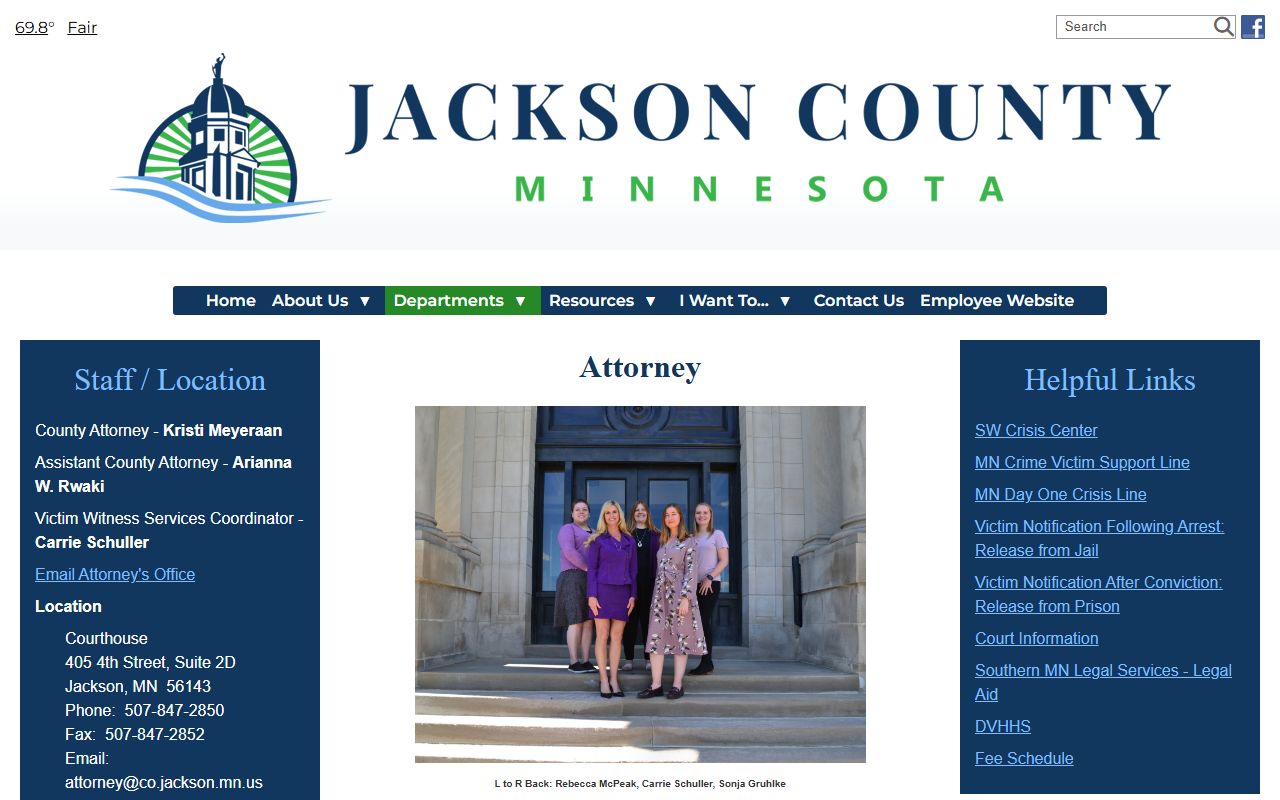
That prosecutor role matters because an arrest can lead to filed charges, amended charges, dismissal, or no filed case depending on the available evidence and charging decision.
How to Find Jackson County Arrest Records and Charges
For court charges, start with MCRO Case Search and select Jackson County when narrowing court locations. MCRO can search by person name, business name, case number, citation number, attorney name, or attorney license number. Pending criminal, traffic, and petty misdemeanor cases without a conviction may not return by defendant name, so case number, citation number, or attorney search can be more reliable when the matter is recent.
- Open MCRO Case Search and accept the terms.
- Search by case number or citation number when available, especially for pending matters.
- Use a name search with Jackson County selected for broader public case results.
- Open the case detail and review the Register of Actions, charge entries, hearing dates, and dispositions.
- Contact Jackson County Court Administration at (507) 800-7003 for certified copies or records not available online.
For arrest reports, incident reports, accident reports, and booking-related non-court records, use the Sheriff's records channel instead of MCRO. Jackson County states that requests may be made in person with a Request for Information form or by emailing so-records@co.jackson.mn.us. Ongoing investigations require approval before release, and juvenile information is restricted.
The Sheriff record and report request page is the county channel for law-enforcement reports connected to arrests, accidents, and investigations.
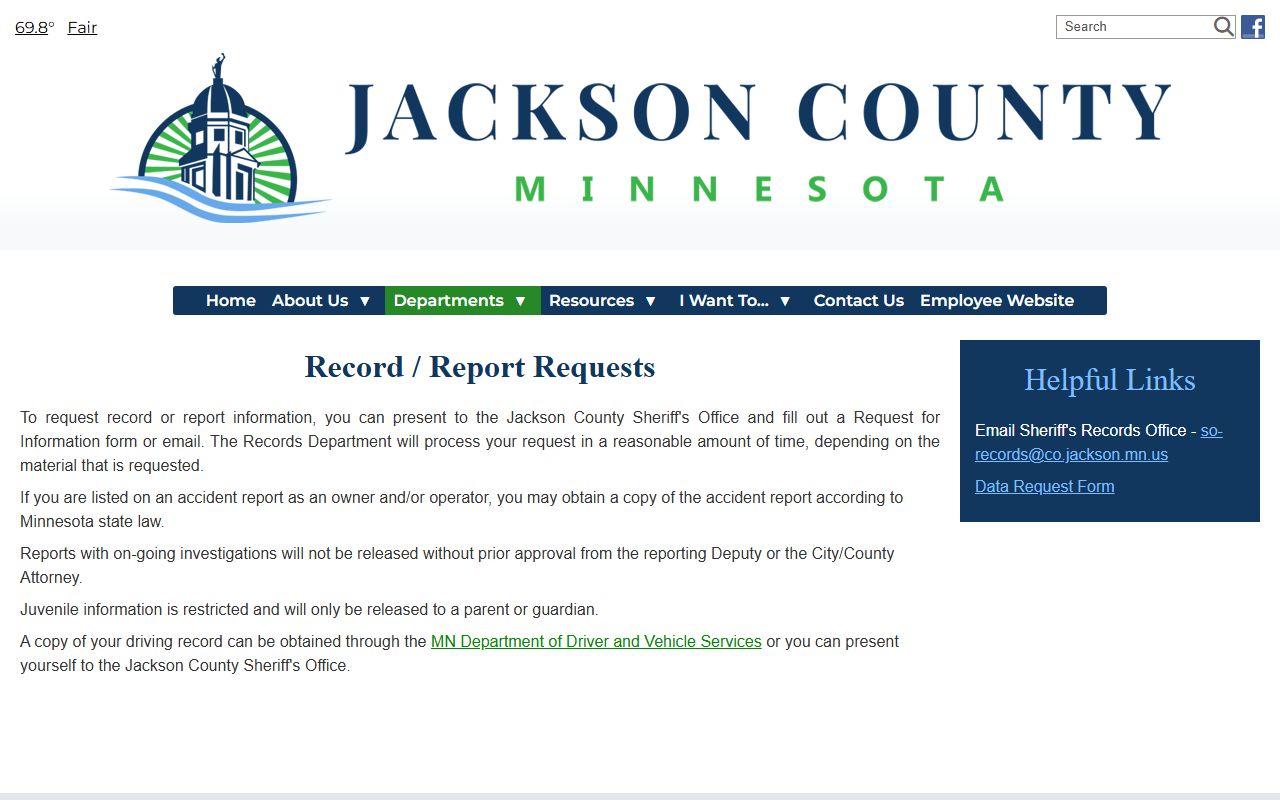
Use that sheriff request path for the arrest-side record, then use MCRO or Court Administration for the court charge record that follows if charges were filed.
How Charges Reach District Court
Jackson County criminal matters are filed in District Court. The research identifies adult criminal charging documents as part of Minnesota's electronic charging process, with charges originating through prosecutor or law-enforcement eCharging, citations, or criminal complaints. The County Attorney prosecutes adult felony crimes and cases involving adults and juveniles, while the court record shows the case number, charge information, hearings, filings, orders, and disposition when public access allows.
| Source | Where It Appears | Use |
|---|---|---|
| Citation | MCRO citation search and Court Payment Center records | Common for traffic, petty misdemeanor, and some criminal matters. |
| Criminal complaint | District Court case file and Register of Actions | Formal court charging document when public and remotely available. |
| Prosecutor filing | Jackson County District Court | Shows filed charges, amendments, dismissals, and case progress. |
| Sheriff report | Sheriff records request channel | Documents law-enforcement activity, not the final court outcome. |
The county's Police to Citizen online reporting page is separate from court charges and is used for eligible non-emergency reporting.
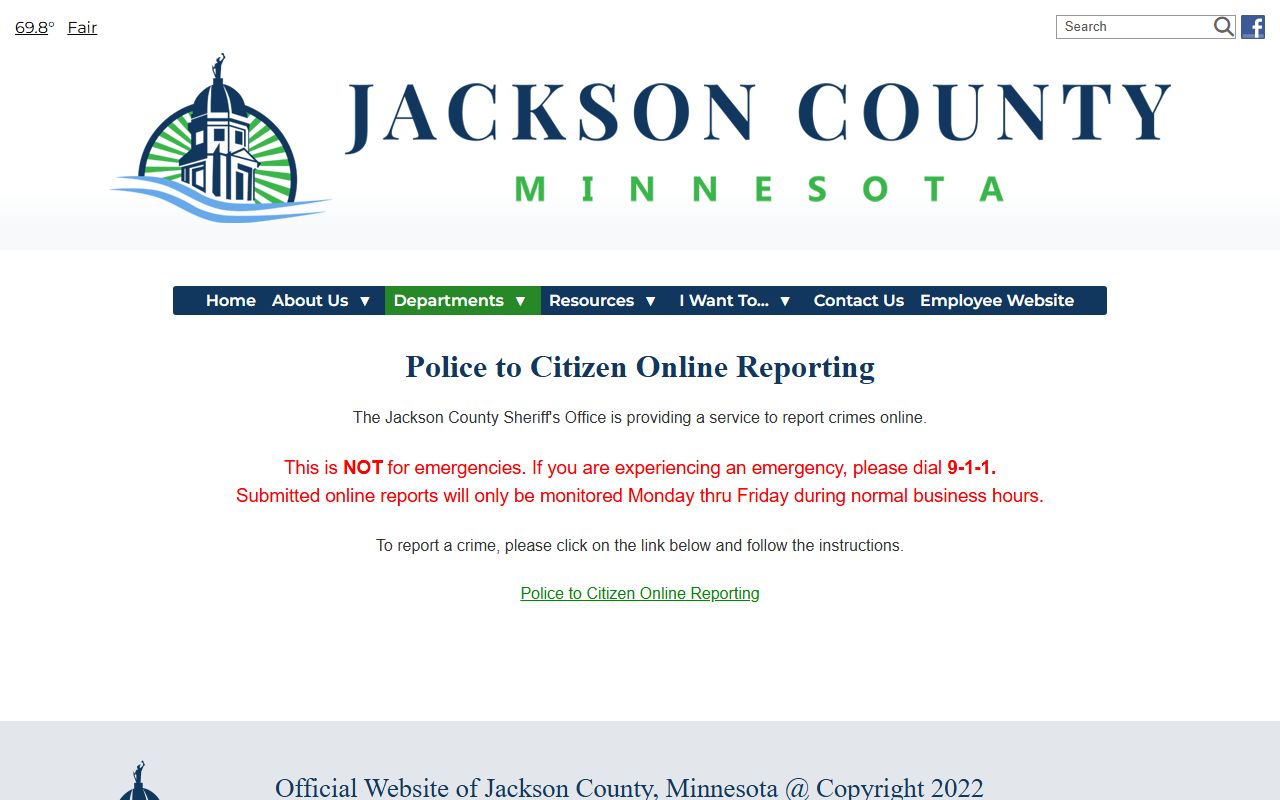
Reports made through that public-safety channel do not replace MCRO, Court Administration, or the prosecutor's filed charging records.
Charge Status and What It Means
A charge can change after filing. MCRO warns that a case type or charge category is not the final outcome and that final sentence level appears in the Register of Actions or disposition information. A filed charge can remain pending, be amended, be reduced, be dismissed, or result in a conviction after a plea or verdict. Always compare charge entries with the disposition section before treating a record as final.
| Status | What It Means |
|---|---|
| Pending | The matter is still active or unresolved in court; pending name-search access may be limited in MCRO. |
| Amended or reduced | The filed charge was changed during the case, often by prosecutor action or court order. |
| Dismissed | The charge or case was dismissed; the record may still show the filing and dismissal if public. |
| Convicted or sentenced | The record reflects a plea, verdict, or sentencing event for the charge shown. |
Charges vs. Convictions
Jackson County's jail roster notice warns that arrest does not mean guilt or conviction and that current status of a pending legal matter is through the Minnesota Court System. That distinction is central to any arrest record lookup. The sheriff side can show custody or booking information, but the court side shows whether charges were filed and how they were resolved.
| Charge | Conviction | |
|---|---|---|
| Stage | Formal accusation filed in District Court. | Outcome after plea, verdict, or other final adjudication. |
| Record source | MCRO case detail, complaint, citation, or Register of Actions. | Disposition, sentencing entry, judgment, or payment record. |
| Meaning | Not proof of guilt. | Reflects court outcome for the specific charge. |
Sealed vs. Expunged Records
Minnesota public access is broad but not unlimited. MCRO may omit a case because it is expunged, sealed, confidential, destroyed, or not remotely accessible under the Minnesota Rules of Public Access. Chapter 609A governs criminal expungement, and Section 609A.03 describes petition procedure and filing-fee requirements unless a fee waiver applies. For Jackson County cases, expungement petitions are filed in the District Court where the case was filed.
| Sealed | Expunged | |
|---|---|---|
| Public visibility | Hidden or restricted by law or court order. | May no longer appear in public MCRO results. |
| Legal basis | Court rule, statute, confidentiality classification, or case type restriction. | Minnesota Chapter 609A or related expungement authority. |
| Next step | Contact Court Administration for permitted access procedure. | Review eligibility and filing requirements before assuming access is available. |
Minnesota Access Rules for Arrest and Charge Data
Law-enforcement data and corrections data have different public-access rules from judicial case records. Minn. Stat. Section 13.82 applies to law-enforcement data, including many sheriff records. Minn. Stat. Section 13.85 applies to corrections and detention data, and Jackson County's jail roster also cites Minn. Stat. Section 641.05. Judicial branch records are governed by Minnesota Rules of Public Access to Records of the Judicial Branch, including Rule 8 on inspection, copying, bulk distribution, and remote access.
The Minnesota law-enforcement data statute is the access framework for many sheriff incident, arrest, and report records.
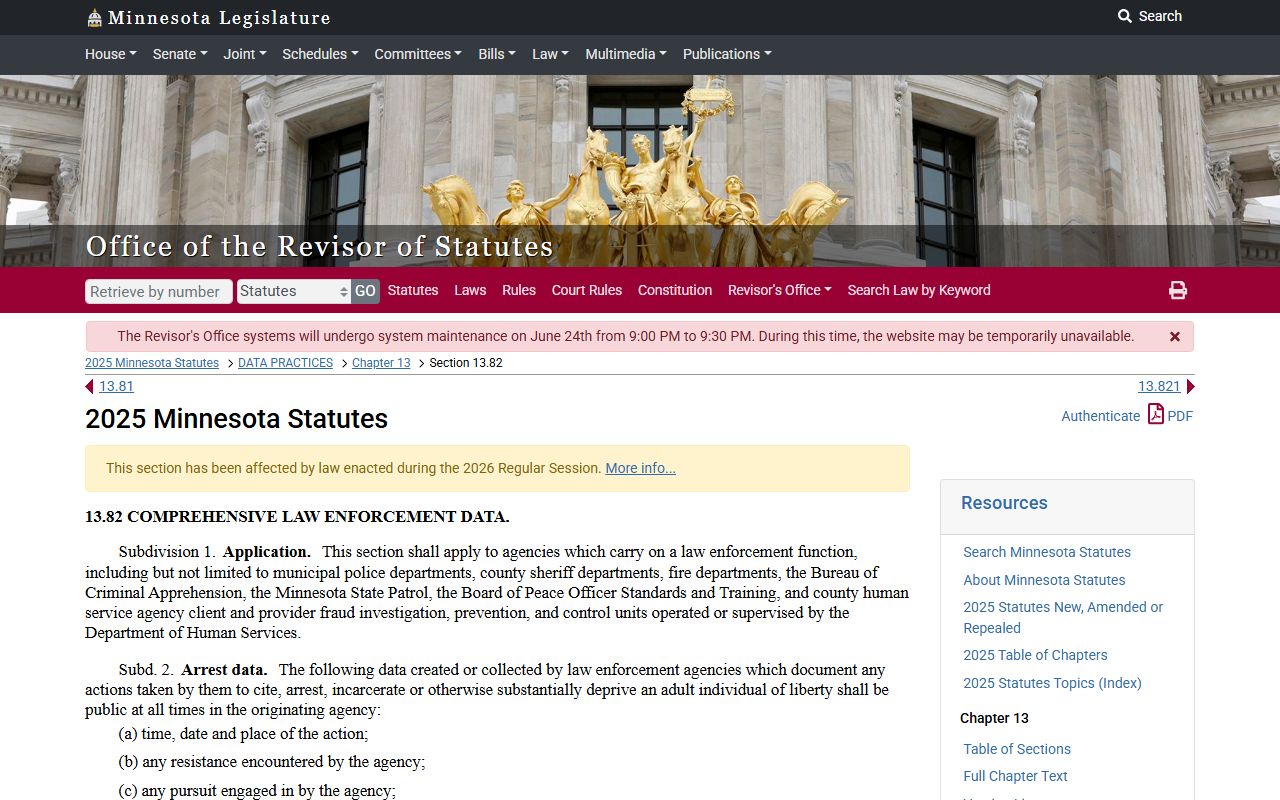
That statute helps explain why a sheriff report request can have different release limits than an MCRO case lookup.
The Minnesota corrections and detention data statute is also relevant when arrest information overlaps with jail custody records.
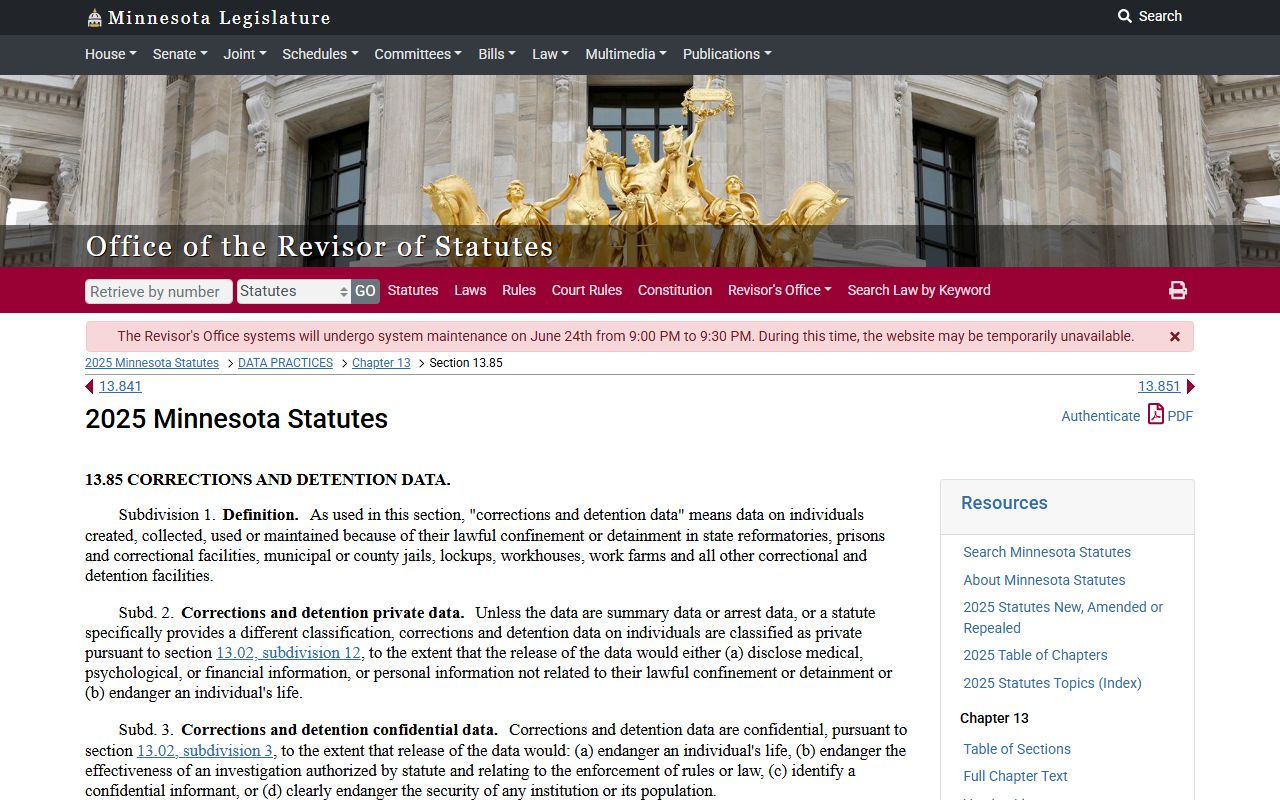
Use detention-data rules for jail custody information, law-enforcement-data rules for sheriff reports, and judicial access rules for filed court charges.
Statewide Criminal History and Background Checks
MCRO is not the official criminal-history background check channel. The Minnesota Judicial Branch directs background checks to the Minnesota Bureau of Criminal Apprehension criminal history search because BCA links criminal history through fingerprints. MCRO can be useful for Jackson County court case review, but it should not be treated as a complete criminal-history report or employment, tenant, credit, insurance, or licensing screening source.
Important: This website is not a consumer reporting agency and cannot be used for FCRA-regulated screening decisions.
Restricted Charge Records in Jackson County
Juvenile records, CHIPS matters, Juvenile Delinquency Felony 16 records, OFP and HRO cases, public civil commitment documents, sealed cases, expunged cases, and active investigations may be restricted online or unavailable to the general public. MCRO also omits party street addresses and certain comment fields. If a case does not appear, it may be sealed, expunged, older than available electronic records, confidential, not remotely accessible, or searchable only by case number.